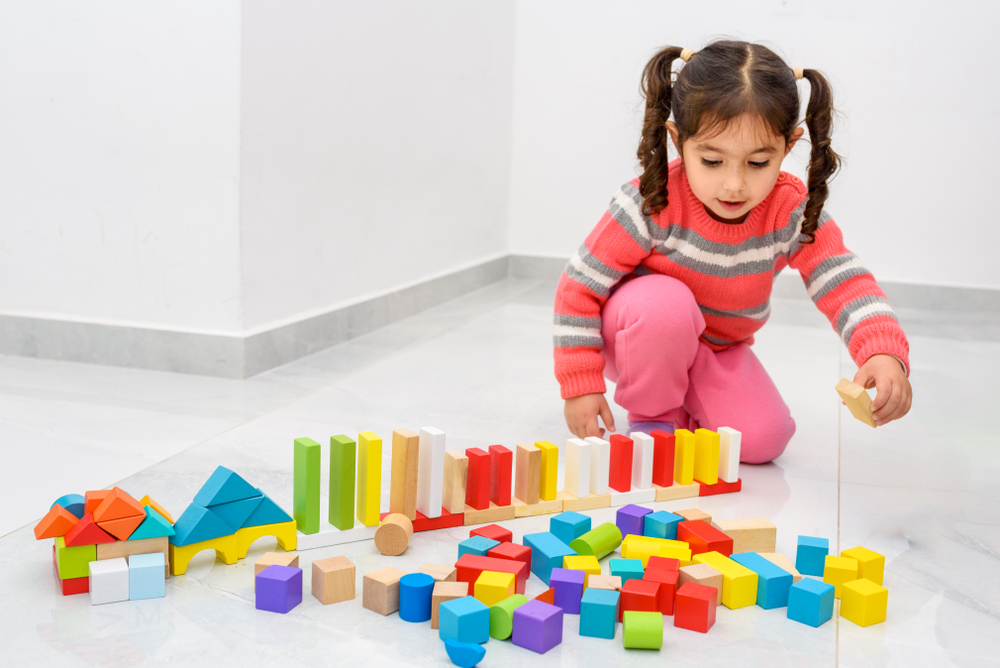
If you could give your child a head start on a fantastic academic career, wouldn’t you? Of course, you would. Every parent wants their children to succeed in school, from Kindergarten to high school graduation and beyond. That’s why the state of Florida offers a unique enrichment program called VPK to help your young one develop the skills necessary for Kindergarten. Orlando VPK programs fill up quickly, however, so it’s best to learn about the enrollment process well in advance and be prepared.
Private VPK (Voluntary Prekindergarten) combines the state-supported VPK framework with private preschool features to create focused kindergarten-readiness experiences for young learners. This article explains what private VPK means, why Montessori-style private VPK can accelerate readiness, and how program design, teacher qualifications, and full-day schedules reduce friction for working families. Many parents want clear, evidence-linked reasons to choose a private VPK provider; this guide maps concrete classroom activities to measurable readiness outcomes and outlines practical enrollment steps in Orlando.
You will learn the key academic and social-emotional benefits of private VPK, how Montessori curriculum elements translate into kindergarten skills, a balanced comparison of private versus public VPK options, and step-by-step guidance for enrolling in a private Montessori VPK program. Throughout, the focus is on actionable information: activity-to-outcome mappings, checklists, and comparison tables, so families can evaluate options for kindergarten readiness with confidence and schedule next steps for visits or applications.
Private VPK programs deliver concentrated early-learning experiences by combining VPK standards with private preschool practices such as smaller groups, extended hours, and specialized curriculum models. These programs accelerate kindergarten readiness through structured activities, individualized pacing, and enriched materials that build literacy, numeracy, motor skills, and social-emotional learning. Recent research and Florida VPK accountability reviews emphasize the value of sustained, high-quality early learning in improving kindergarten entry skills, and private programs often align resources to those same readiness targets.
Private VPK supports these top benefits:
The following table summarizes how specific program features develop key readiness skills and the expected outcomes for children:
| Benefit Area | How it’s Developed | Expected Outcome |
|---|---|---|
| Academic Skills | Montessori language and math materials are used in guided and independent work | Improved letter recognition, emergent literacy, and number sense |
| Fine Motor & Coordination | Practical life exercises and manipulative materials | Better pencil grip, scissor use, and classroom task independence |
| Social-Emotional Learning | SEL routines, conflict-resolution practice, and cooperative tasks | Greater self-regulation, peer cooperation, and classroom readiness |
| Family Logistics | Full-day scheduling and flexible pickup options | Consistent routines that support sustained learning and working-family needs |
Private VPK supports holistic learning by deliberately integrating cognitive, motor, language, and social-emotional activities into daily routines. Teachers use multi-sensory materials and hands-on tasks to build foundational skills: sensorial work sharpens classification and pattern recognition, practical life strengthens fine motor control, and language materials expand vocabulary and phonemic awareness.
Social-emotional routines are embedded in transitions and group work, reinforcing self-regulation and cooperative problem-solving that directly affect classroom behavior in kindergarten. Understanding these linked mechanisms helps parents evaluate whether a program’s daily schedule and materials are aligned with kindergarten-readiness goals.
Individualized attention in smaller groups allows teachers to assess each child’s readiness profile and adapt lesson pacing for mastery rather than speed. When educators can tailor materials and provide targeted scaffolding, children who need extra practice in letter-sound correspondence or counting receive appropriate repetitions, while children ready to advance access richer tasks. This differentiation supports positive learning trajectories and builds confidence, which in turn reduces behavioral friction and improves engagement in later kindergarten routines. For parents, individualized plans mean progress is observable, and goals are specific rather than generic.
The Jupiter School applies the Montessori philosophy within a private VPK framework to emphasize independence, hands-on learning, and the development of kindergarten-ready skills. Classrooms use Montessori sensorial and practical-life materials to help children develop concentration, fine motor control, and emergent literacy through everyday activities mapped to measurable readiness outcomes.
Teachers at The Jupiter School are qualified and background-checked, and the program operates full-day schedules that support working families while maintaining a consistent learning day for children. After explaining the Montessori mechanisms above, here is a practical example of how a private Montessori VPK can be implemented in Orlando. Families seeking tours or enrollment information can contact The Jupiter School to learn about openings and scheduling.
The Jupiter School’s program emphasizes these Montessori elements:
Montessori curriculum elements prepare children through sequenced, manipulative-rich activities that isolate skills and build mastery. Practical life tasks improve hand-eye coordination and concentration needed for handwriting and task completion. Sensorial materials develop visual discrimination and sorting skills that support math concepts like patterning and seriation. Language materials focus on vocabulary development, phonological awareness, and progressive letter-sound mapping that underpin emergent literacy. By connecting each activity to a specific readiness skill, Montessori lessons create clear pathways from classroom practice to kindergarten expectations.
Montessori practice embeds SEL through routines, grace-and-courtesy lessons, and collaborative work that teaches turn-taking, empathy, and problem-solving. Children practice self-regulation during individualized work cycles and learn conflict-resolution strategies in guided group interactions, thereby reducing disruptive behavior and encouraging sustained attention. These social competencies are associated with greater classroom engagement and improved academic outcomes at kindergarten entry. For families, SEL integration means children arrive at kindergarten with both the skills and the confidence to participate successfully.
Private VPK offers distinct tradeoffs compared with public VPK models, including smaller group dynamics, curriculum flexibility, extended hours, and enrichment options that some families find essential for kindergarten readiness. While public VPK provides universal access to early learning, private providers can often adapt schedules and curricular depth to family needs, add enrichment blocks, and prioritize consistent staffing models.
The decision should weigh cost and accessibility alongside these programmatic advantages and the specific readiness goals parents have for their child. Below is a quick comparison table to help you scan common differences between typical public VPK settings and private VPK options, like those offered by experienced Montessori providers.
This table helps parents quickly see where private options differ in practice:
| Feature | Typical Public VPK | Typical Private VPK (e.g., Montessori approach) |
|---|---|---|
| Class Size | Larger groups for broad access | Smaller groups for individualized attention |
| Curriculum | State-aligned VPK standards | VPK + Montessori materials and guided independence |
| Hours | Often part-day programs | Full-day options to support working families |
| Enrichment | Limited extra activities | Integrated enrichment and multi-sensory learning |
Differences in class size and staff training influence how instruction is delivered and how well teachers can individualize learning. Smaller class sizes enable more frequent one-on-one interactions and formative observation, while trained Montessori teachers and background-checked staff focus on guided discovery rather than direct instruction alone. Teacher qualifications and ongoing professional development contribute to consistent implementation of curriculum and SEL routines that support readiness. When evaluating programs, parents should ask about staff training pathways, approach to differentiation, and classroom observation opportunities.
Extended hours and curriculum flexibility reduce logistical stress for working families by aligning care with employment schedules and offering predictable learning days. Full-day programs also increase the amount of structured and unstructured learning time, which supports routine building and cumulative skill practice. Flexible curricula can accommodate family preferences, such as additional literacy blocks or targeted math scaffolding, so children receive tailored experiences that accelerate readiness. For many parents, that predictability and alignment with family life make private VPK a practical choice.
Enrollment in a private VPK program involves confirming VPK eligibility, scheduling a tour, completing application materials, and discussing tuition and funding options. Florida VPK eligibility is set by state guidelines, and private providers frequently guide families through how VPK funding integrates with full-day private options. Families ready to proceed are encouraged to request a tour or enrollment packet from The Jupiter School to discuss openings and schedules.
Here’s a simple step-by-step checklist:
The following table breaks down common enrollment steps, documents, and where to complete them:
| Enrollment Step | Required Documents/Criteria | Where/How to Complete |
|---|---|---|
| Eligibility Check | Proof of the child’s age and residency | Provider intake or state VPK portal guidance |
| Tour & Observation | Family visit and classroom observation | Schedule with the provider to view the Montessori classrooms |
| Application Submission | Completed enrollment forms and consent documents | Submit to the provider during the application window |
| Tuition Discussion | Payment agreement and funding plan (VPK integration) | Discuss directly with the provider’s financial office |
Enrollment generally begins with confirming that a child meets Florida VPK eligibility requirements, followed by scheduling a tour to assess program fit and classroom environment. After the visit, families submit application forms, verify required documents, and discuss tuition or funding integration with the provider. Private providers typically help families understand how VPK hours coordinate with full-day schedules and any additional private tuition. Clear communication during the tour and application phase aligns expectations around curriculum, hours, and readiness goals.
Private VPK tuition varies by program model and whether families choose full-day services beyond the state-provided VPK hours; private providers accept VPK funding for the VPK portion, while families often cover extended-day fees. Families should request current tuition rates and ask about common financial topics, such as sibling discounts, sliding scales, and payment plans, during enrollment discussions.
The Jupiter School offers full-day Montessori VPK options and encourages families to discuss financial arrangements and scheduling during a tour or enrollment meeting to determine the best fit for kindergarten readiness and family logistics.
The dedicated staff at The Jupiter School is ready to walk you through the process and help you enroll your child in this very beneficial program. Contact us today!
Have Your Child Experience The Joy Of Learning!

Call or Email us for more Information License # C09OR1012